Saturday, March 17, 2012

Nematode wars

We've just declared war on nematodes in our garden. This summer we had really poor tomato and silverbeet crops and suspected nematodes. We ripped them up and we were right. In case you didn't know, nematodes are microscopic worms which live in soil.They can enter roots to feed and breed causing galls. If they feed from the outside they cause roots to stunt and distort. They thrive in warm moist sandy soils, which means they are a big problem in Perth. Plants affected by nematodes will struggle to grow and often collapse in the heat because their roots cannot take up water. The only real way to tell whether you have them is by ripping up the plants to look for the distorted roots. Here's a pic of eggplant roots affected.


So, what's the remedy? Well, there are various ways. One is to plant things like mustard, which acts as a soil fumigant to repel them. We did this last year without success. We also added lots of compost and manures to try to improve the soil, but we let the soil dry out a bit and lost a lot of the good bacteria which out compete nematodes. Another way is to use pesticides, but that's obviously a no go for organic growers. You can also solarise the soil. You can do this by putting clear plastic on the soil in sunny weather. This kills off the nematodes (cooks them), but unfortunately it kills all the good bugs that you need in productive soil.

We were getting desperate and were about to solarise. Then we thought we'd make one call before we took this drastic action. We called Derek at our local garden store. Derek knows everything about everything gardening, so it was worth a shot. Of course he knew what to do. He said don't solarise, you'll take one step forward and two back. Instead he suggested a two prong attack. Firstly, buy some molasses and dilute it with 5 parts water and water it on the garden from a watering can. Then add lots of manure, water in well and cover with thick (20-30cm) layers of mulch. We also added vermicompost from our worm farm at this stage.


Wait a couple of weeks and then add a product called Bactivate. It comes in granular form and has lots of bacteria in it, one of which combats nematodes. Apparently the nematodes eat the bacteria, feel very full and starve to death after! You could probably skip the Bactivate if you have lots of compost and vermicompost, but we thought we'd give it a go.


The aim is to introduce as many bacteria into the soil as possible to out compete the nematodes. In this way they should suppress the nematodes whilst doing great things for your soil and plants. The plan is to plant our winter veg after easter. We'll let you know how it goes.

I'm coming to realise that summer is the key season to gardening in Perth. It's so easy to drop the ball in the heat and dry. You tend to plant less and also tend the soil less. If you let your soil dry out over summer you lose all the gains you've made in winter and spring building up your soil and the sand gobbles up all the goodness and you're back to the beginning again. So, next summer I promise to mulch loads more and make sure to keep the soil moist even if there are no plants growing. A green manure would be good too, but I won't get ahead of myself...   

Thursday, March 15, 2012

Colloidal compost

It's been a long hot summer as usual here, with 8 heat waves so far (3 days or more over 35 degrees C). This is the time of year we struggle most to keep the garden going and making compost goes on the back burner. It's much harder to get vegie scraps from the shops in summer since summer veg has less removed for sale. The other factor is the heat, we'd rather be at the beach than making compost in 35C. It also means that I tend to have less time and energy for feeding the fruit trees, so the compost tends to sit around for a while longer. With compost this is a good thing, since it breaks down further and matures. It cools down and worms, slaters, beetles and bacteria weave their magic. I make sure to water it every now and again and cover it up so it stays moist. My latest batch is about 6 months old now and it's a beauty. It is homogeneous, with "uniform particles and colour, and very few of the original ingredients discernible" (T. Marshall, Composting: "The ultimate organic guide to recycling your own garden").


It's alive, teaming with macro and micro fauna. There are probably billions in this one handfull!


Best of all it's colloidal. This "refers to its ability to hold water and nutrients. A colloid remains in suspension in water for a very long time, or indefinitely. For example, jelly crystals can absorb enormous quantities of water to form jelly, but it is not easy to squeeze water back out of them. Plant roots can extract water and nutrients from colloids" (T. Marshall). Perth's soils are amongst the worst agricultural soils in the whole world. They are gutless, with very few nutrients and very poor water holding properties. This is where compost comes in, the organic matter holds nutrients and water and makes them available to plants instead of washing away into our rivers. Colloidal compost is the best. This is the first time we've made it and we're pretty proud of it. See this post on how to make compost bays and compost yourself. And check out the crumb structure!


Wednesday, March 14, 2012

Home made apple juice

This time of year is apple season down under. We'd just about run out of apple juice, so on my last field trip I stopped at my favourite fruit orchard to get some juicing apples. These are third grade apples, which we get for about 30 cents a kilo. We got Golden Delicious this time and they actually looked pretty good (these are the pick of them we saved for eating).


So, here's how we do the juice. First we wash the fruit and throw out any bad ones. The we chop any bruises off and chop them into pieces that fit in the juicer. We borrow a Breville Fountain juicer, which is ok for the job. You can pick these up pretty cheap second hand as people use them twice and then can't be bothered cleaning them! It just has a rotating blade which throws juice one way and the rest the other way.


The next stage is to pour the juice into a beer brewing keg. This is a method we use to separate the frothy crap from the juice. The keg has a tap at the bottom, which taps off pure juice, some solids sink to the bottom and the froth stays at the top.


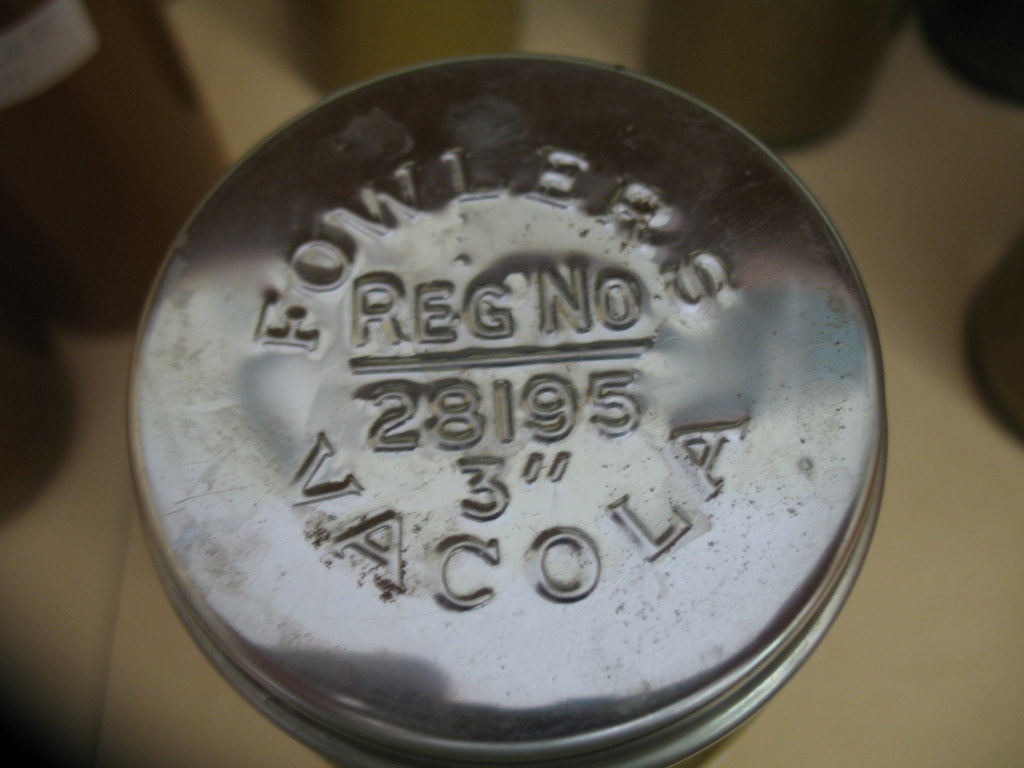
We leave the juice to settle a while and get on cleaning the jars and lids to preserve the juice. We use Vacola number 27's for juice. Pour off the juice through a sieve and funnel into the jars.


Then you just put the rings on, then lids and then clips. 


Now you're ready to preserve. Just place the jars in the bioler and cook 'em up. We have an electric, which takes an hour and an old stove top one which you need to bring to 92 degrees and keep there for an hour. The electric holds 7 jars and Big Bertha holds 12.


The waste can either go to the chooks, worms or compost.


Once they're ready you just remove them and leave them overnight before removing the clips. The juice will keep for years like this.


In the end we got 21 jars of 800ml, or 17 litres of juice (we normally mix it 50/50 with water to drink since it's so sweet). It cost $10 for 30kg of fruit, plus about 25 cents for power. I know what you're thinking, how bloody long did it take. Well, I reckon all up it took about 3 hours. It probably doesn't save us much money, but it does cut our food miles a lot. We actually haven't bought shop juice for over two years now. And of course it tastes delicious.


Sunday, March 4, 2012

a walking submarine

This is an imploder bomber aeroplane. I didn't really know that my Mum and Dad would get this for me for Christmas but I didn't really know that they would. I did it all by myself I didn't use the instructions I just like to use my imagination. 
This is a submarine with a man inside and its a transformer and can transform in to an areoplane and I really like it. It can walk. And the top bit of it, the little roof for the man, is the head of it when it transforms.


Thursday, March 1, 2012

Perfect bread

When you make sourdough bread it's sometimes a bit heavy. This has been happening a lot recently (Amy thinks the hot weather is to blame). So I thought I just had to show you the latest batch, it's perfect!


And look, it's even taller than a piece of shop bought bread. 


It goes without saying that it tastes better too. Well done Amy!

Monday, February 27, 2012

It's the end of the world as we know it

I've just been to a talk by Nicole Foss, AKA Stoneleigh of the Automatic Earth. She is an expert in peak oil, finance and climate change and how these three interact. Among other things she predicted the GFC in 2008, which is something not many can say. She talks about the oncoming 'perfect storm' of firstly economic collapse, then an energy crisis and then climate change. It's not a very upbeat story to say the least! The talk she gave, despite being very blunt and to the point, was a strangely enjoyable and empowering experience. I felt privileged to be informed about this stuff, especially on the economic issues. I won't go into great detail, but here is a brief summary of what I took from the evening:

  • The perfect storm presents 3 huge challenges to humanity. The first of these is an imminent global economic collapse and it may come any time between tomorrow and the next 5-10 years. The main cause of this is that the true value of assets held globally is a fraction of what is stated on paper. This means that for every $100 you have in the bank, shares, insurance, pensions, house value, etc the real value may just be $1 or $10 in the future. This is a classic deflationary bubble, which is bound to burst at some stage. 
  • When the shit really hits the fan and people realise this, it will be too late. The first ones to grab the real assets will be banks and other corporations (see the recent case of MF Global), leaving the average Joe with nothing. The implications of this are very scary, this could happen to your bank/pension fund/broker/insurance company/investments some day.
  • Nicole predicts that at a certain point, a contagion will ensue and panic will cause local and national collapses to trigger a global crisis. Given the current level of globalisation this is not hard to envisage. Just look at Greece (due to default any day now) and the rest of Europe.
  • Deflation will follow, with a credit crunch, higher unemployment, higher interest rates and higher taxes.
  • Australia is not immune to this crisis. A collapse in Europe will lead to a collapse in China and without exports to China Australia's economy will go down the gurgler pretty quickly. In fact no countries are immune, although the poorer countries with good social cohesion will most probably suffer the least.

  • The next challenge will be an energy crisis, caused by peak oil. Discoveries of conventional oil have plumeted in the last decade, in fact most of the oil we are using now was discovered in the 60's and 70's. Recent discoveries are smaller and crucially much harder to tap. Net energy (the amount of energy you can use after taking in to account the amount you used to get it) of new supplies is rapidly decreasing, from 100 (1 unit in to get 100 out) to around 15 now. This will continue to decline until it's not worth bothering to drill (1 to 1).
  • Other sources of fossil energy (such as coal and natural gas) will not be able to make up for the drop in oil production due to lower energy density and greater distances to markets.
  • Renewables, whilst being an important part of future supplies, have low energy density and require huge inputs of energy to change infrastructure from a centralised model to a more local, decentralised model. 
  • Drops in oil production will require huge changes to the way we live, eg pharmaceuticals, agriculture, building, transport.

  • The third crisis is climate change. The details may be up for debate, but CC is a fact and it will affect your future and that of generations to come.
  • Carbon reduction schemes will most probably become redundant due to huge emissions reductions caused by the credit crunch. This does not mean we should be complacent about cutting emissions, it's just a reality that economic crises lead to less consumption and hence less pollution.
  • Climate change may mean higher temperatures, more droughts, more cyclones, more flooding or even huge drops in temperatures depending on location.
But wait, don't slash your wrists quite yet! Nicole stressed that there are many things we can do on a personal and community level to be prepared:

  • Reduce your levels of debt as a priority. When banks feel the crunch interest rates will go sky high. Add the risk of losing your job or getting a pay cut and you can see why debt is bad. If you can shift money from shares or pensions to pay off debt it might be a good option, since the value of these will collapse in time. One great suggestion I heard was this: in Australia you can't access your superannuation (pension) funds until about the age of 65. BUT you can make your fund self managed, then use the funds to pay off a friend's home loan and they do the same to pay off yours. I love this idea and I'm going to investigate further. 
  • It may be good to reconsider if you are thinking about getting into the property market. House prices are still hugely inflated despite drops since 2008. All deflationary bubbles in the past (such as the 1930's) follow the same pattern of exponential growth followed by a sudden fall and the prices after the fall are always below the level when the boom started. This boom started in 1983, so house prices are due to drop to pre 1983 levels and won't rebound for many decades or more.
  • If you own your home then make sure you want to stay there for the long term, since it may be impossible to sell your home in the future. Renters may have an advantage in that they will have greater freedom to move to places with less conflict or more opportunities.
  • Save cash (cold hard cash) and buy short term government bonds. This will tide you over the critical first few months of the crisis. Banks may not give you your money if you want it, this happened in Argentina recently. Government bonds are safer than bank deposits since governments will stay liquid longer than banks.
  • Invest in things which will reduce your ongoing costs, eg solar panels, rainwater tanks, growing your own food.
  • Build links in your community. This could be as simple as getting to know your neighbours better or as ambitious as setting up a community garden or decentralised power hub. Strong communities will be able to work together to pool resources and skills in order to reduce the impacts of the collapse.
  • Stay healthy if you can. Private and public health insurance schemes may collapse, meaning medical bills shift to a pay as you go basis.
  • Prepare psychologically and tell your friends and family about these issues. People who can avoid fear and panic will be better off.
If you can make these changes and the crash doesn't come what have you lost? Nothing really, in fact you've probably gained a fair bit. I would urge you to take this seriously and investigate further. If you can catch Nicole's remaining Australian and New Zealand talks do so (see the Automatic Earth for details). Otherwise you can buy or rent the DVD "A Century of Challenges".

So, it's not quite the end of the world as we know it, but the party's pretty much over. Sorry to be the bearer of bad tidings, please don't shoot the messenger! I hope Nicole Foss is wrong, I really do. But something tells me she's not, it just rings true...

Sunday, February 26, 2012

Bananarama

At last, we're actually eating our own bananas now. They are delicious, much sweeter and creamier than the Cavendish you get at supermarkets. Did you know that almost all bananas sold in the western world are clones of one plant. That means they genetically identical to each other, so 99% of the bananas most people eat taste exactly the same (ok, but pretty average compared to other varieties). Like most modern foods, the variety was chosen for shelf life, yield and disease resistance. This means it was not chosen for taste, which I think should be a high priority for a food. Anyway, enough ranting, here are some pics.


This is a hand of bananas, with 15 fingers. The first fruit we picked were under ripe and didn't ripen after picking. Then we picked some more and they took around 3 weeks in the fruit bowl to ripen, so now we're picking a hand at a time and giving some away. We're not letting the fruit ripen on the tree since we want to spread out the picking over as long a time as we can. The hand weighed in at 2 kg. I'd like to think we're saving lots of money in this venture, but I calculated that the 120 bananas we have on one plant should weigh in at around 16kg. Sod's law has dictated we are harvesting in a period of high supply and low prices (about $2 a kilo non organic), so a return of $32 isn't really going to put a big dent in our groceries bill! Maybe next year there will be another cyclone and bananas will be selling for $15 a kilo...

But of course that's not what it's all about. It's about learning new skills, building resilience, self sufficiency, the sense of joy you get when you see your plot yielding new fruit and finally it's about the yum.